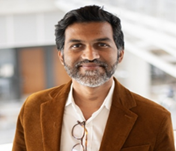
ICCCN 2026 Panel 1: Monday, July 27, 2026, 1:30 – 3:00pm
Title: Intelligence at the Edge: Grand Challenges for AI and Networked Systems
Abstract:
The rapid proliferation of sensors, mobile devices, autonomous systems, and cyber-physical infrastructure is shifting computation and intelligence from centralized clouds to the network edge. This transformation creates a new class of scientific and engineering challenges that lie at the intersection of artificial intelligence, networking, distributed systems, and real-world applications.
This panel explores the emerging frontier of edge intelligence, encompassing both AI deployed on edge platforms enabling real-time learning, inference, and decision-making close to data sources. It also explores how AI techniques can be developed and used to design, manage, and optimize edge networks themselves. These two directions are deeply intertwined: intelligent applications depend on efficient edge infrastructure, while increasingly complex networks require AI-driven automation and adaptation.
Panelists will discuss key challenges such as scalable learning across distributed edge devices, resource-constrained AI models, adaptive and autonomous network management, trustworthy and secure edge intelligence, and the integration of AI into critical domains including healthcare, smart infrastructure, advanced manufacturing, and next-generation wireless systems.The discussion will also engage the audience in identifying grand challenge problems for the coming decade—problems that require interdisciplinary collaboration and could define the next generation of intelligent networked systems. The goal of the panel is to surface ambitious ideas, foster new collaborations, and shape a research agenda for AI-enabled edge ecosystems that deliver transformative societal and technological impact.
Moderator: Ness Shroff (The Ohio State University)
Panelists:
- Elisa Bertino (Purdue University)
- Kaushik Chowdhury (UT Austin)
- Stratis Ioannidis (Northeastern University)
- Yingbin Liang (The Ohio State University)
Ness B. Shroff:
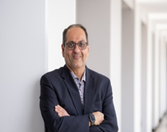
Ness Shroff received the Ph.D. degree in electrical engineering from Columbia University in 1994. He joined Purdue University immediately thereafter as an Assistant Professor
with the School of Electrical and Computer Engineering. At Purdue, he became a Full Professor of ECE and the director of a university-wide center on wireless systems and applications in 2004. In 2007, he joined The Ohio State University, where he holds the Ohio Eminent Scholar Endowed Chair in networking and communications, in the departments of ECE and CSE. He currently serves as the Institute Director of the NSF AI Institute for Future Edge Networks and Distributed Intelligence (AI-EDGE. He is also the director of the newly formed AI(X)Hub at The Ohio State University. He has held visiting (chaired) professor positions at Tsinghua University, Beijing, China, Shanghai Jiaotong University, Shanghai, China, and IIT Bombay, Mumbai, India. He has received numerous best paper awards for his research including the IEEE INFOCOM Test of Time award for his work on information freshness. He is listed in Thomson Reuters’ on The World’s Most Influential Scientific Minds, and has been noted as a Highly Cited Researcher by Thomson Reuters in 2014 and 2015. He currently serves as the steering committee chair for ACM Mobihoc and Editor in Chief of the IEEE/ACM Transactions on Networking. He received the IEEE INFOCOM Achievement Award for seminal contributions to scheduling and resource allocation in wireless networks.
Elisa Bertino:
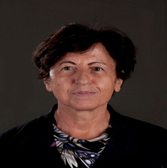
Elisa Bertino is a Samuel D. Conte Distinguished Professor of Computer Science at Purdue University. She has worked for more than 40 years in data security and privacy. Her research interests include she machine learning techniques for cybersecurity, security of cellular networks, zero-trust architectures, and agentic AI security. In the area of machine learning for cybersecurity, she led the design of transfer learning techniques for network attack detections and for detection and classification of malware. In the area of cellular network security, she led the design of the LTEInspector and 5Greasoner frameworks to test security properties of cellular networks leading to the identification of ten novel vulnerabilities in the 4G LTE (Long Term Evolution) and 5G standards, and the discovery of new privacy attacks in 4G and 5G cellular protocols. For this work, she was named to the GSMA (Global System for Mobile Communications Association) Mobile Security Research Hall of Fame. More recently she has been working on machine learning techniques for detecting malicious base stations and attacks to synchronization protocols for O-RAN. She is a Fellow member of IEEE, ACM, and AAAS. She received the 2002 IEEE Computer Society Technical Achievement Award, the 2005 IEEE Computer Society Tsutomu Kanai Award, the 2019-2020 ACM Athena Lecturer Award, and the 2021 IEEE Innovation in Societal Infrastructure Award. She is currently serving as ACM Vice President.
Kaushik Chowdhury:
Kaushik Chowdhury holds the Chandra Family Endowed Distinguished Professorship in Electrical and Computer Engineering #2 at The University of Texas at Austin, USA, where he is a member of the Wireless Networking and Communications Group (WNCG). He earned his M.S. from the University of Cincinnati and his Ph.D. from the Georgia Institute of Technology. His research spans applied machine learning for wireless systems, including deep learning for spectrum sensing and sharing, RF cybersecurity, multimodal sensor fusion and digital twins. He is a Fellow of the IEEE. His work has been recognized with major honors, including being a finalist for the 2023 US Blavatnik National Awards for Young Scientists, the U.S. Presidential Early Career Award for Scientists and Engineers (PECASE), the DARPA Young Faculty Award, the ONR Director of Research Early Career Award, and the NSF CAREER Award.
Stratis Ioannidis:
Dr. Stratis Ioannidis is Professor in the Electrical and Computer Engineering Department of Northeastern University, in Boston, MA, where he also holds a courtesy appointment with the Khoury College of Computer Sciences. He received his B.Sc. (2002) in Electrical and Computer Engineering from the National Technical University of Athens, Greece, and his M.Sc. (2004) and Ph.D. (2009) in Computer Science from the University of Toronto, Canada. Prior to joining Northeastern, he was a research scientist at the Technicolor research centers in Paris, France, and Palo Alto, CA, as well as at Yahoo Labs in Sunnyvale, CA. He is the recipient of an NSF CAREER Award, a Google Faculty Research Award, a Facebook Research Award, a Søren Buus Outstanding Research Award, a Martin W. Essigmann Outstanding Teaching Award, and several best paper awards. His research interests span machine learning, distributed systems, networking, optimization, and privacy.
Yingbin Liang:
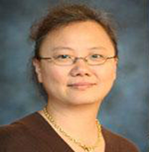
Dr. Yingbin Liang is currently a Professor at the Department of Electrical and Computer Engineering at the Ohio State University (OSU), and a core faculty of the Ohio State Translational Data Analytics Institute (TDAI). She also serves as the Deputy Director of the NSF AI-EDGE Institute and the Co-Lead for Foundational AI Pillar of OSU AI(X) Hub. Dr. Liang received the Ph.D. degree in Electrical Engineering from the University of Illinois at Urbana-Champaign in 2005, and served on the faculty of University of Hawaii and Syracuse University before she joined OSU. Dr. Liang’s research lies at the intersection of machine learning, large-scale optimization, statistical signal processing, information theory, and wireless networks, with their growing applications to other scientific domains. She received the National Science Foundation CAREER Award and the State of Hawaii Governor Innovation Award in 2009. She also received EURASIP Best Paper Award in 2014. She is currently an Information Theory Society Distinguished Lecturer for 2026–2027. Dr. Liang is an IEEE fellow.
ICCCN 2026 Panel 2: July 28, 2026, 1:30 – 3:00 pm
Title: Emerging Technologies for NextG Networks
Abstract:
As the global communications ecosystem evolves beyond 5G toward NextG (6G and beyond), a new generation of enabling technologies is redefining the foundations of wireless connectivity. This panel brings together leading experts from academia, industry, and former government leaders—now driving innovation within the private sector—across the United States and Europe. The discussion will highlight key technological breakthroughs required to realize NextG capabilities, such as AI-native communications and networking, advanced radio technologies, dynamic spectrum sharing, and Open RAN architectures. It will also consider the broader factors influencing their development and deployment. By connecting theory with real-world implementation, the panel offers a holistic perspective on the NextG landscape, highlighting opportunities in cutting-edge research, commercialization, and international collaboration.
Moderator: Wenjing Lou (Virginia Tech)
Panelists:
- Sastry Kompella (Virginia Polytechnic Institute and State University)
- Matti Latva-aho (University of Oulu)
- Masoud Olfat (University of Maryland, College Park)
- Zhi-Li Zhang (University of Minnesota)
Wenjing Lou:

Wenjing Lou is the W. C. English Endowed Professor of Computer Science at Virginia Tech and a Fellow of both the IEEE and the ACM. Her research interests cover many topics in the cybersecurity field, with her current research focusing on security and privacy problems in wireless networks, blockchain, trustworthy machine learning, and Internet of Things (IoT) systems. Prof. Lou is a highly cited researcher by the Web of Science Group. She received the Virginia Tech Alumni Award for Research Excellence in 2018, the highest university-level faculty research award. She received the IEEE INFOCOM Test-of-Time paper award in 2020 and IEEE INFOCOM Achievement Award in 2025. She is the TPC chair for IEEE INFOCOM 2019 and ACM WiSec 2020. She was the Steering Committee Chair for IEEE CNS conference from 2013 to 2020. She is currently the vice chair of IEEE INFOCOM and a steering committee member of IEEE CNS. She served as a program director at the US National Science Foundation (NSF) from 2014 to 2017.
Sastry Kompella:
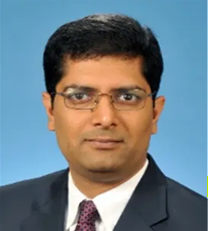
Sastry Kompella (Fellow, IEEE) earned his Ph.D. in computer engineering from the Virginia Polytechnic Institute and State University in 2006. Currently, he serves as the CEO of Nexcepta, Inc., an advanced R&D company providing cutting-edge technical solutions and mission-critical capabilities to the Department of Defense (DoD). Prior to this role, he held the position of Section Head for the Wireless Networks Research Section within the Information Technology Division at the U.S. Naval Research Laboratory in Washington, DC, USA. He has authored over 220 (seven award-winning) publications, 14 NRL reports, one patent, one book, and five book chapters. He currently serves as an associate editor for IEEE/ACM Transactions on Networking. His research interests encompass various aspects of wireless networks, including cognitive radio, dynamic spectrum access, and age of information. His recent work has focused on NextG wireless systems, including O-RAN architectures, integrated sensing and communications (ISAC), and AI-driven spectrum management for resilient and contested environments. He has led multiple efforts aligned with DoD FutureG initiatives, emphasizing distributed control, edge intelligence, and spectrum coexistence in tactical networks.
Matti Latva-aho:

Matti Latva-aho (IEEE Fellow) is an expert in wireless communications. He served as Director of the Centre for Wireless Communications (CWC) at the University of Oulu from 1998 to 2006 and later as Head of the Department of Communication Engineering until August 2014. He is a Professor of Wireless Communications at the University of Oulu and served as Director of Finland’s National 6G Flagship Programme in 2018-2025. He is also a Global Fellow at The University of Tokyo. He has played a central role in shaping global research agendas for 6G systems, particularly through his leadership of the National 6G Flagship Programme. His research contributions span key enabling technologies for future wireless systems, including radio access technologies, spectrum use, system architectures, and the broader societal role of next-generation networks. Through extensive international collaboration with academic, industrial, and policy stakeholders, he has contributed to positioning Europe among the early leaders in 6G research. In 2025, he was appointed Vice-Rector for Research at the University of Oulu for a five-year term. With an extensive portfolio of over 600 conference and journal publications, Prof. Latva-aho has significantly advanced the field of wireless communications.
Masoud Olfat:
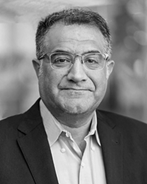
Masoud Olfat received the Ph.D. and Postdoctoral degrees in wireless communications from the University of Maryland, College Park, in 2003, and has been an Adjunct Professor there and at other universities in the past 20 years. He is Vice President of Technology and Ecosystem Development with Federated Wireless and has led the technology development for different CBRS components, such as SAS, ESC, CBRS Device, the CBRS Certified Professional Installer development and training plan, CBRS security framework. He has also led the technology development and certification program for 6 GHz AFC Development. He is the Technology Lead for Spectrum Sharing development in different spectrum bands as part of NTIA National Spectrum Strategy implementation. He chairs several activities in multi-company standard activities, including the CBRS and AFC Test and Certification program, OnGo Alliance 4G, and 5G Network Architecture. He is the lead of coordination activities among SAS Administrators and with Government entities (I-JWG). He has also been involved in the development of the 5th Generation of mobile wireless technologies in 3GPP. Prior to joining Federated Wireless, he managed numerous key projects essential to the deployment of 4G networks at Sprint Nextel, Clearwire, and Ligado (LightSquared), playing a key role in the research and development of 4G technologies in global standardization communities such as WiFi, WiMAX, and LTE, and International Telecommunication Unit-R, IMT-Advanced, and IMT-2020 requirements.
Zhi-Li Zhang:

Zhi-Li Zhang is McKnight Distinguished University Professor and Qwest Chair Professor at Department of Computer Science & Engineering, University of Minnesota. Dr. Zhang’s research interests lie broadly in computer communication and networks, AI, cloud and cyber-physical systems and emerging applications that they enable. His past research was centered on measurement, modeling, design and development of service-oriented Internet architectures, scalable quality-of-service (QoS) solutions, resilient routing and large-scale multimedia content distribution systems, with the goal to enhance Internet service availability, reliability, manageability, security, economic viability and user quality-of-experience. His current research focuses on 5G and next-generation wireless networks, emerging mobile applications and (human-supervised) autonomous systems such as autonomous vehicles (with remote and cooperative driving capabilities), advanced air mobility, robotics, smart manufacturing/agriculture as well as networking/systems for AI and AI for networking/systems. Dr. Zhang's research has been supported by NSF, DoD, USDOT, and Industry. He is the UMN Principal PI for the USDOT-funded Center for Connected and Automated Transportation (CCAT) led by the University of Michigan. He is the lead PI for the NSF CISE Large Project on Networking, Edge & AI Support for Teleoperations of Connected & Autonomous Vehicles (CAV) and for the NSF TIP "Breaking Low Latency" Ideas Lab Project on 5G/NextG Support for Remote and Cooperative Driving. He has collaborated with Amazon, AT&T, Cisco, Ericsson, General Motors, InterDigital, John Deere, Meta, Microsoft, and Nokia, among others. Some of these industrial collaborations have resulted in joint patents and research outcomes incorporated in production systems. Dr. Zhang has published more than 350 journal, conference and workshop papers. Dr. Zhang has received several honors for his research, including several Best Paper Awards. He is a Fellow of IEEE.